
Local Water Management Organizations
Water levels in the Great Salt Lake have dropped significantly in recent years due to climate change, population growth, and increasing water use. These changes affect ecosystems, air quality, and communities across Utah.
While state and federal agencies play a role in water policy, much of the day-to-day decision-making happens locally. This project focuses on the organizations working on the ground to manage water across the Great Salt Lake Basin.
Bailey Holdaway, PhD Student, USU
This research was partially supported by I-GUIDE, an Institute funded by the National Science Foundation, under award #2118329. Additionally, this was supported by the Utah Water Research Lab and the USU Office of Research.
There's really nothing we're not trying to explore right now to prepare for the future.
Who Manages Water Locally?
Local Water Management Organizations (LWMOs) are responsible for delivering, managing, and planning water use. These organizations make critical decisions about how water is used every day. These entities include:
- Cities and towns: manage drinking water systems and local infrastructure
- Irrigation companies: used to primarily deliver water for agriculture, but increasingly deliver water to residents and businesses
- Special service districts: provide services like water delivery, wastewater treatment, or infrastructure development
What Did We Study?
We worked with water managers across the Great Salt Lake Basin using surveys and interviews to better understand:
- How local water management organizations are adapting to water challenges
- What helps or limits their ability to respond
- How they interact with other organizations and government agencies
- Whether they feel represented in water policy decisions
Key Findings
Local water managers are adapting, but unevenly
Many organizations are making changes such as:
- Expanding water conservation efforts
- Installing water meters and improving tracking
- Updating infrastructure
- Planning for future water shortages
However, not all organizations are changing at the same pace. Some maintain existing practices due to stability, limited resources, or institutional constraints.

We're trying to be as proactive as possible. We were reactive for far too long.

Water conservation is a focus for some
Across all organization types, conserving water has become a top priority for many, but not all. For those that are focusing on conservation, efforts include:
- Encouraging water-wise landscaping
- Using tiered pricing to reduce use
- Returning unused water back to rivers
These efforts are happening even when organizations do not explicitly prioritize the Great Salt Lake itself.
We're trying to… help our customers develop efficiency to where they can make that limited resource go further.
Challenges go beyond water supply
Key challenges identified by water managers often included concerns about availability of water supplies in the future. Other challenges included:
- Limited funding and financial resources
- Aging or inadequate infrastructure
- Staffing and workforce limitations
- Uncertainty around future water availability
Water law and allocation systems can also limit flexibility and discourage conservation in some cases.

The State… policy has put a stop to the possibility of using reclaimed water from our wastewater treatment facility.

Collaboration is common, but not always easy
Local organizations frequently interact with other local water management organizations, state agencies, and residents or shareholders.
These relationships can support innovation and coordination in ways that allow entities to get more done together, share resources, or distribute risk. However, interactions with others can also involve conflict, competition, or regulatory challenges that may impact an entity's efforts.
The water community is fantastic. If somebody has a problem, everybody has a problem.
Many local organizations feel underrepresented
Fewer than half of surveyed organizations feel they have a meaningful voice in water policy decisions at the state or basin level.
This suggests a gap between those managing water locally and those shaping broader policy.
If we don't have a seat at the table, we're usually on the menu.
What Does This Mean?
Our findings highlight that:
- Local organizations play a critical but often overlooked role in water management
- There is no “one-size-fits-all” solution to water challenges
- Supporting local capacity and including these organizations in decision-making can improve water resilience
Reports & Publications
- Adaptive Capacity of Local Water Management Organizations in the Great Salt Lake Basin (under review)
- Trying To Be ‘At the Table’ Instead of ‘On the Menu’: Irrigation Company Perspectives on Managing Water: https://onlinelibrary.wiley.com/doi/pdf/10.1111/1752-1688.70144
- Irrigation company descriptive report: https://digitalcommons.usu.edu/envs_stures/41/
- Municipality descriptive report: https://digitalcommons.usu.edu/envs_stures/42/
- Special service district descriptive report (in preparation)
- Bailey Holdaway's master's thesis focusing on irrigation companies: https://digitalcommons.usu.edu/etd2023/509/
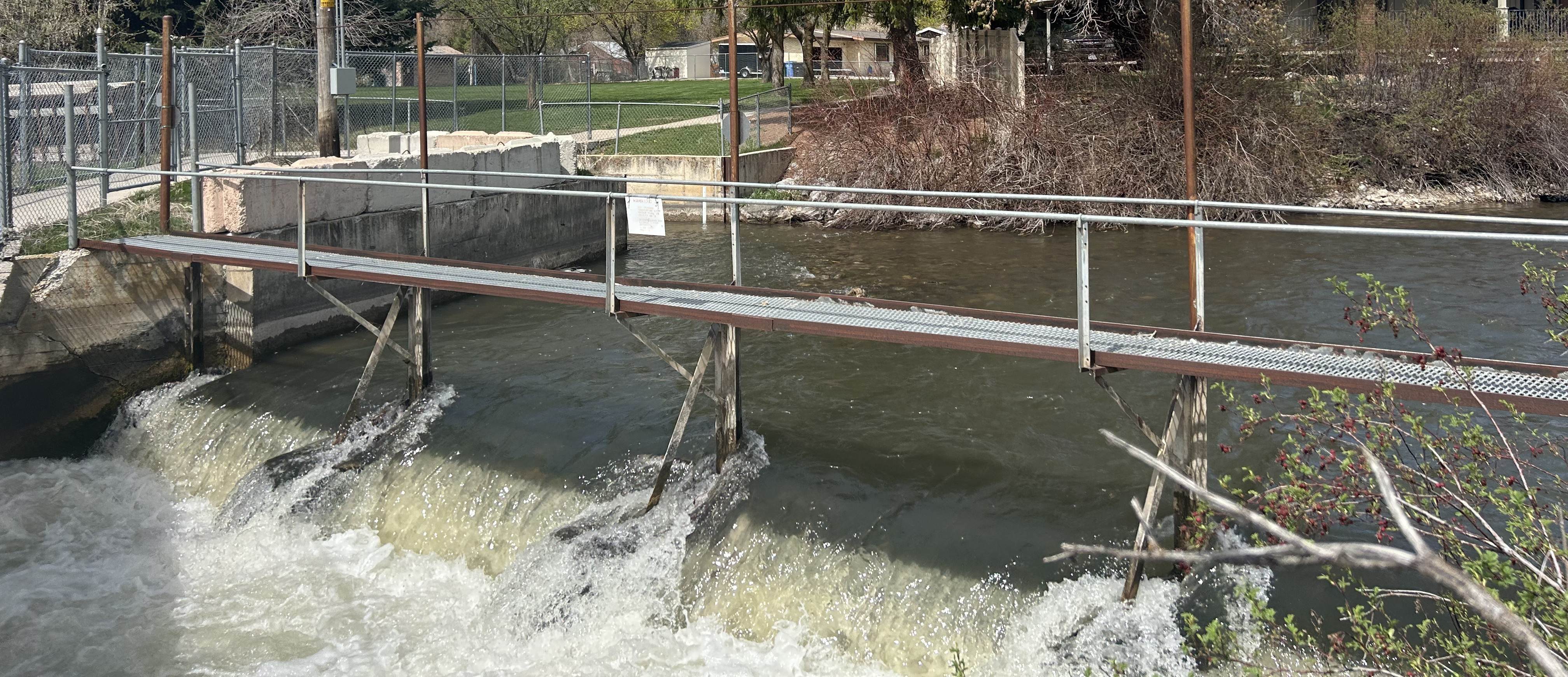
Photo credits: USU Extension, Bailey Holdaway, and the Salt Lake Tribune