Towards an Understanding of Bonneville Cutthroat Trout Responses to Riparian Grazing Exclosures
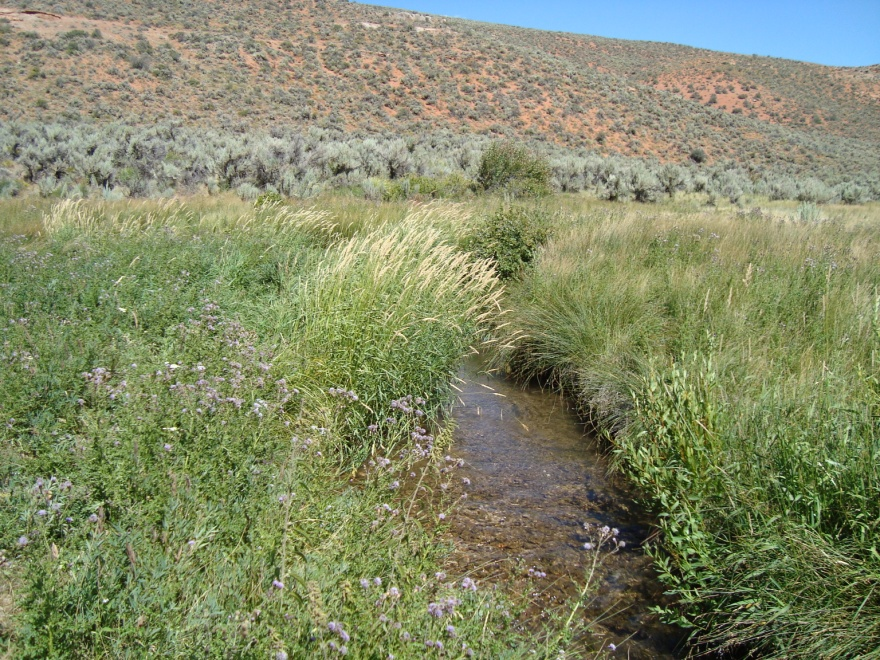
Salmonid responses to riparian grazing exclosures are notoriously variable. Consequently, understanding the factors contributing to differential responses among systems is critical to the success of future passive restoration efforts. We assessed the effectiveness of riparian grazing exclosures to restore riparian vegetation, instream physical habitat, invertebrate prey resources, and subsequent Bonneville cutthroat trout (BCT) populations. Specifically, we compared responses among ten paired grazed and ungrazed reaches spanning a gradient of grazing intensity, exclosure size, and construction date. We observed predictable increases in vegetative cover (40%) and stubble height (240%), overhead cover (28%), undercut banks (30%), and channel narrowing (24%) for ungrazed reaches. However, of greater interest and surprise were consistent, positive BCT responses (density: 210% increase; biomass: 193% increase), as well as increased inputs of terrestrial arthropods (136% increase) following grazing cessation. Despite consistent, positive responses for measured abiotic and biotic variables, the magnitude of change exhibited considerable variability among systems. Variability in the magnitude of BCT responses was most strongly related to grazing regime and the degree of geomorphic and invertebrate prey resource recovery following grazing cessation. For example, differences in BCT populations between grazed and ungrazed reaches were greatest under season-long grazing regimes, whereas BCT densities were more comparable within watersheds managed for short-duration, rotational grazing. These results suggest changes in grazing regimes at large spatial scales, and not necessarily complete grazing cessation, can be more effective at restoring BCT populations than the small-scale grazing exclosures studied herein. Lastly, we demonstrate that terrestrial invertebrate prey resources are a critical component of BCT summer diets and may play a vital role in facilitating the recovery of BCT populations post-grazing.
Collaborators
- Utah State University
- Utah Division of Wildlife Resources
- Intermountain Center for River Rehabilitation and Restoration
- U.S. Bureau of Land Management
- U.S. Forest Service