
Cottonwood Wildfire Project
Monitoring fuel treatment effectiveness and previous wildfire influences on burn severity and forest recovery in the Cottonwood Wildfire
Collaborators:
1) U.S. Forest Service, Fishlake National Forest, Beaver Ranger District
2) Utah Division of Forestry, Fire and State Lands
Forest or Woodland Type: Pinyon-juniper woodland, ponderosa pine, mixed conifer, and aspen
Management Objectives: Determine whether pre-fire management (prescribed fire, harvest, and thinning) and previous wildfire influenced the severity of the Cottonwood Wildfire
Location: Beaver Ranger District, Fishlake National Forest, Beaver and Piute Counties, Utah
Project Area: 97,458 acres
Status: Ongoing
Phase: Phase 1 post-fire monitoring 75% complete
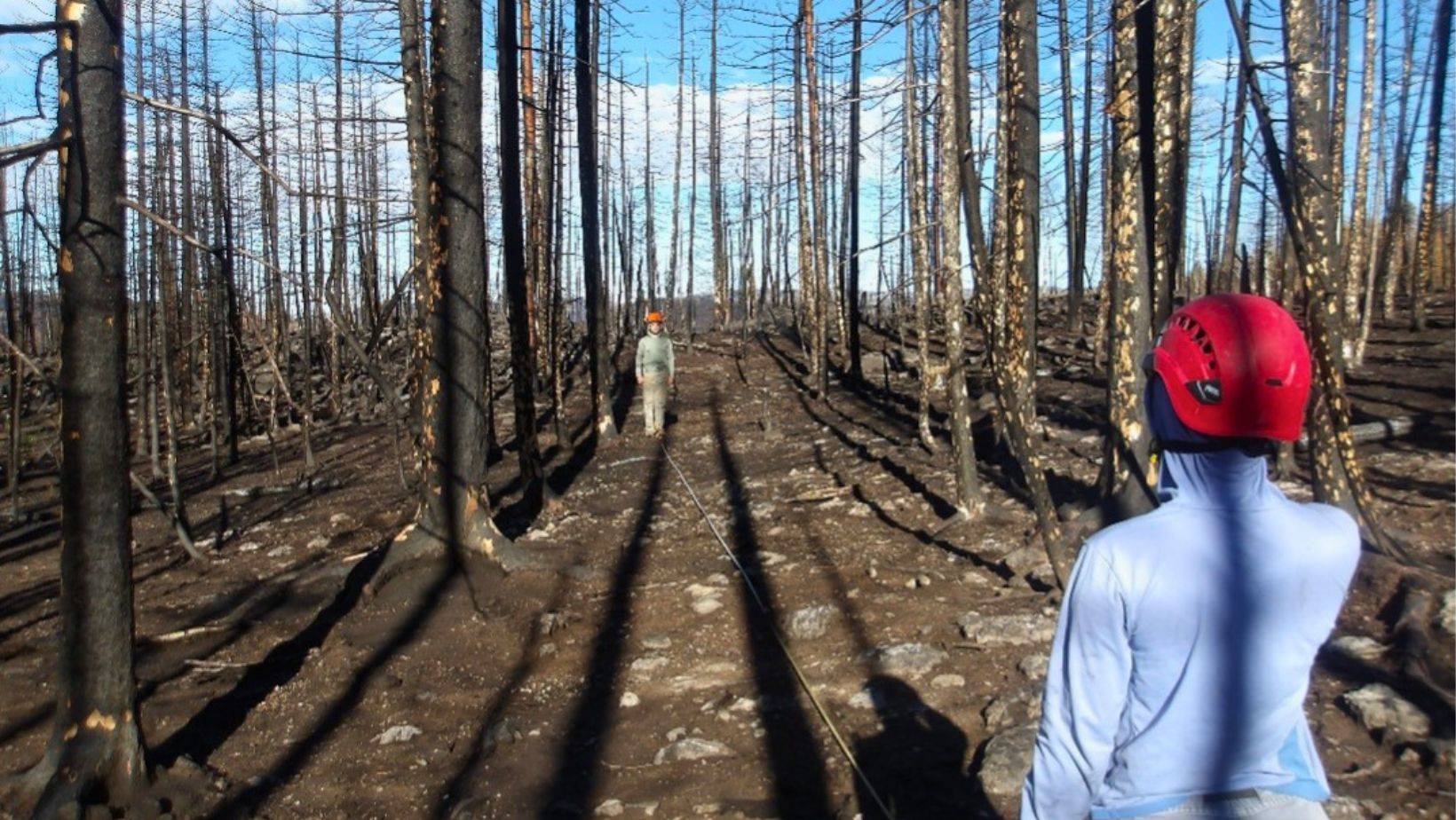
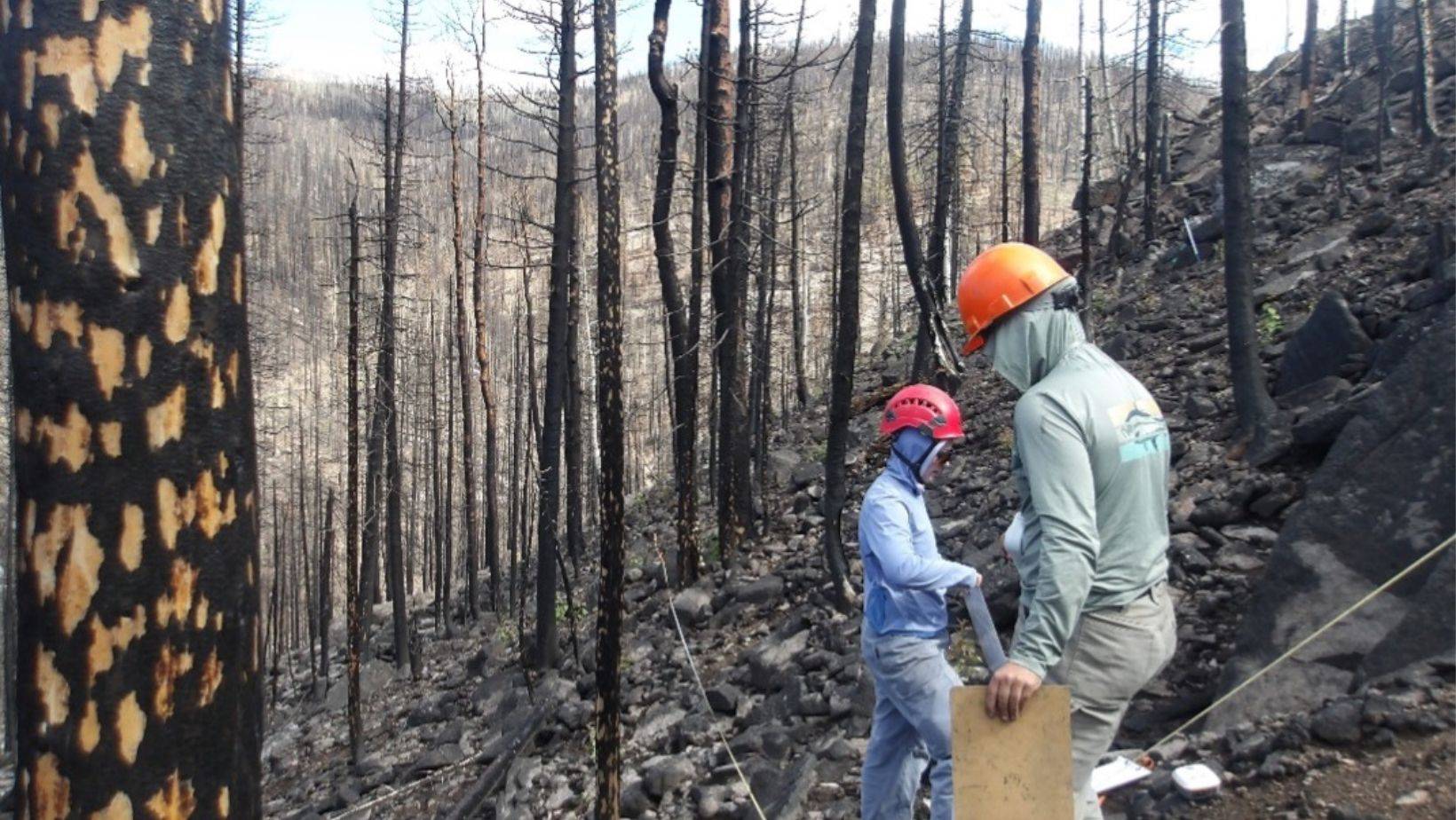
UFRI field crew members measure forest burn severity in the Cottonwood Wildfire in Fishlake National Forest, Utah.
Project Summary
UFRI is collaborating with the U.S. Forest Service (USFS) and the Division of Forestry, Fire and State Lands (FFSL) of the Utah Department of Natural Resources to aid in monitoring post-fire effects of the 2026 Cottonwood Wildfire that burned over 97,000 acres of the Beaver Ranger District in Fishlake National Forest. Dry fuel and hot, windy weather conditions at the time caused extreme fire behavior across much of the forest, resulting in large areas of exposed mineral soil, followed by debris flows and erosion in some areas.
UFRI’s work will inform USFS and FFSL about the effectiveness of treatments that were implemented prior to the fire. In the summer of 2026, UFRI established over 70 plots on the Cottonwood Wildfire. We established plots in areas previously treated with thinning, prescribed fire, and harvesting, and in areas that had experienced prior wildfire, to determine a baseline of treatment effectiveness and forest recovery that can be used to guide future mitigation efforts.
Significance and Potential Impact
Our objective is to test the degree to which pre-fire interventions (harvest, thinning, and prescribed fire), as well as previous wildfires, influenced the effects of the Cottonwood Wildfire. Understanding how well those treatments worked to reduce severity, along with any differences in effectiveness among those treatments, is useful for planning future forest management. In addition, monitoring the plots long-term will aid in our understanding of how pre-fire fuel treatments impact post-fire forest recovery.