
Pine Valley Wildfire Risk Reduction
Monitoring thinning treatments in a designated Wildfire Crisis Strategy Landscape in Pine Valley, Utah
Collaborators: U.S. Forest Service, Dixie National Forest, Pine Valley Ranger District
Forest or Woodland Type: Pinyon-juniper woodland
Management Objectives:
(1) Reduce flame lengths and crown fire severity of potential future wildfires in a designated Wildfire Crisis Strategy Landscape to protect communities and critical infrastructure
(2) Thin to a tree density that optimizes fire risk reduction without promoting invasion by exotic annuals (e.g., cheatgrass)
Location: Pine Valley Ranger District, Dixie National Forest, Washington Co., Utah
Project Area: 127,667 acres
Status: Ongoing
Phase: Pre-treatment monitoring partially completed
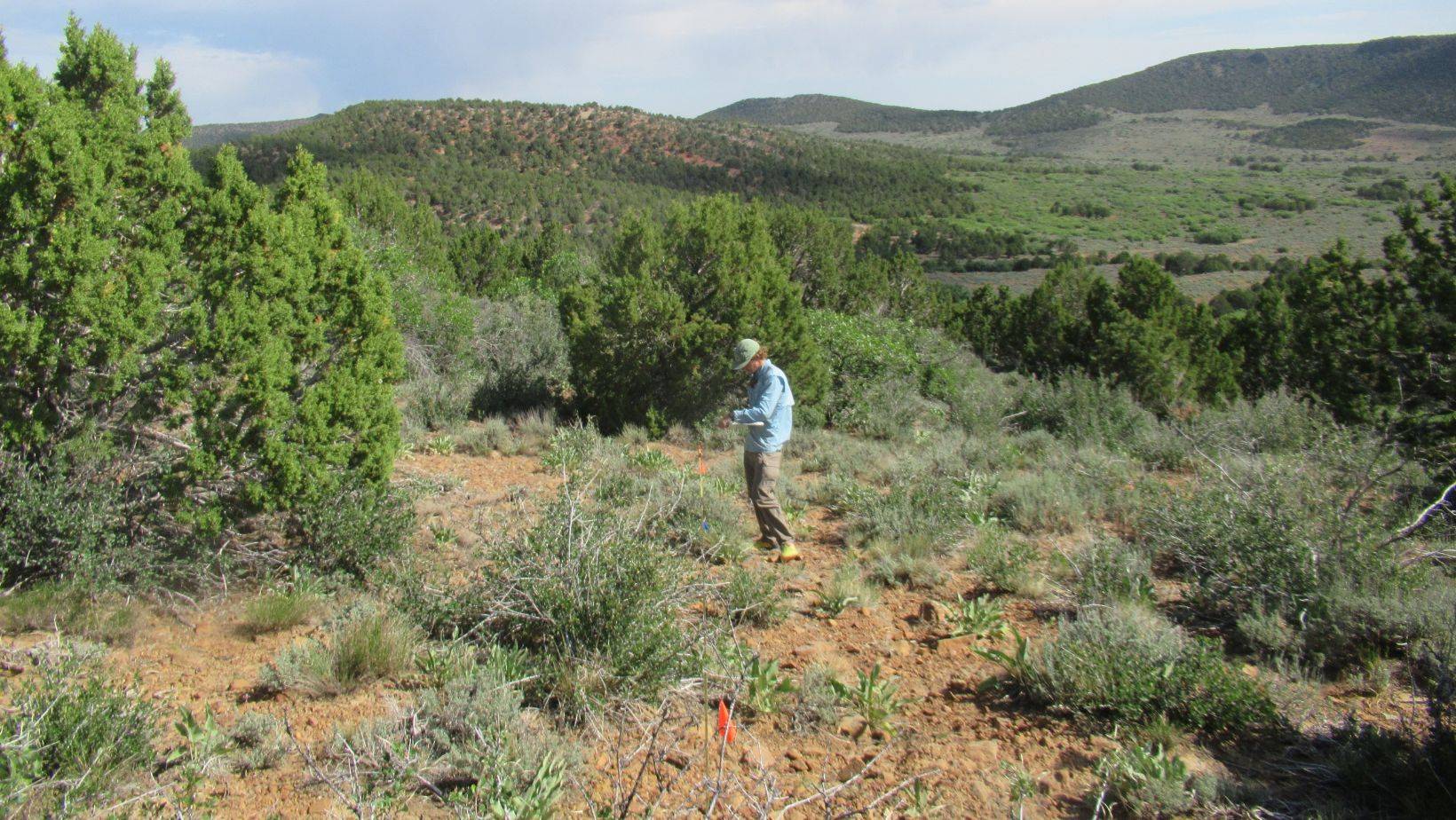
A UFRI technician collects vegetation data in pinyon-juniper woodland, Pine Valley Ranger District, Dixie National Forest, Washington Co., Utah.
Project Summary
UFRI has established 51 monitoring plots in pinyon-juniper woodland sites targeted for fuel treatment reduction treatments along the Hwy 18 corridor of the Pine Valley Ranger District of the Dixie National Forest near St. George, Utah. Using a comprehensive plot monitoring protocol, field crews documented pre-treatment overstory plant species composition; size, density, and condition of woody plant species; ground cover; and fuel loads. This creates a baseline for evaluating the effectiveness of future treatments, as well as associated effects on invasive species, wildlife habitat, and other resource values. Future plots will focus on areas slated for variable density thinning while current plots are in locations where managers intend to use mastication treatments.
Significance and Potential Impact
In addition to evaluating treatment effectiveness and longevity, findings are expected to identify density targets for thinning that maximize fuel risk reduction while minimizing the abundance of invasive species, such as cheatgrass (Bromus tectorum). This will allow the U.S. Forest Service to adapt and implement the most effective treatments over the subsequent phases of this large-scale project.