
Uinta North Slope Fuel Reduction Project
Monitoring the efficacy of treatments to improve forest health and reduce fire risk in the northern Uintas
Collaborators: U.S. Forest Service, Uinta-Wasatch-Cache National Forest, Evanston and Mountain View Ranger Districts
Forest or Woodland Type: Rocky Mountain lodgepole pine forest
Management Objectives:
(1) decrease hazardous fuel loads to reduce the risk of uncontrolled wildfire
(2) use controlled high-intensity slash line burning to promote forest regeneration
Location: Evanston and Mountain View Ranger Districts, Uinta-Wasatch-Cache National Forest, Summit Co., Utah
Project Area: 400 acres
Status: Ongoing
Phase: Pre-treatment monitoring completed
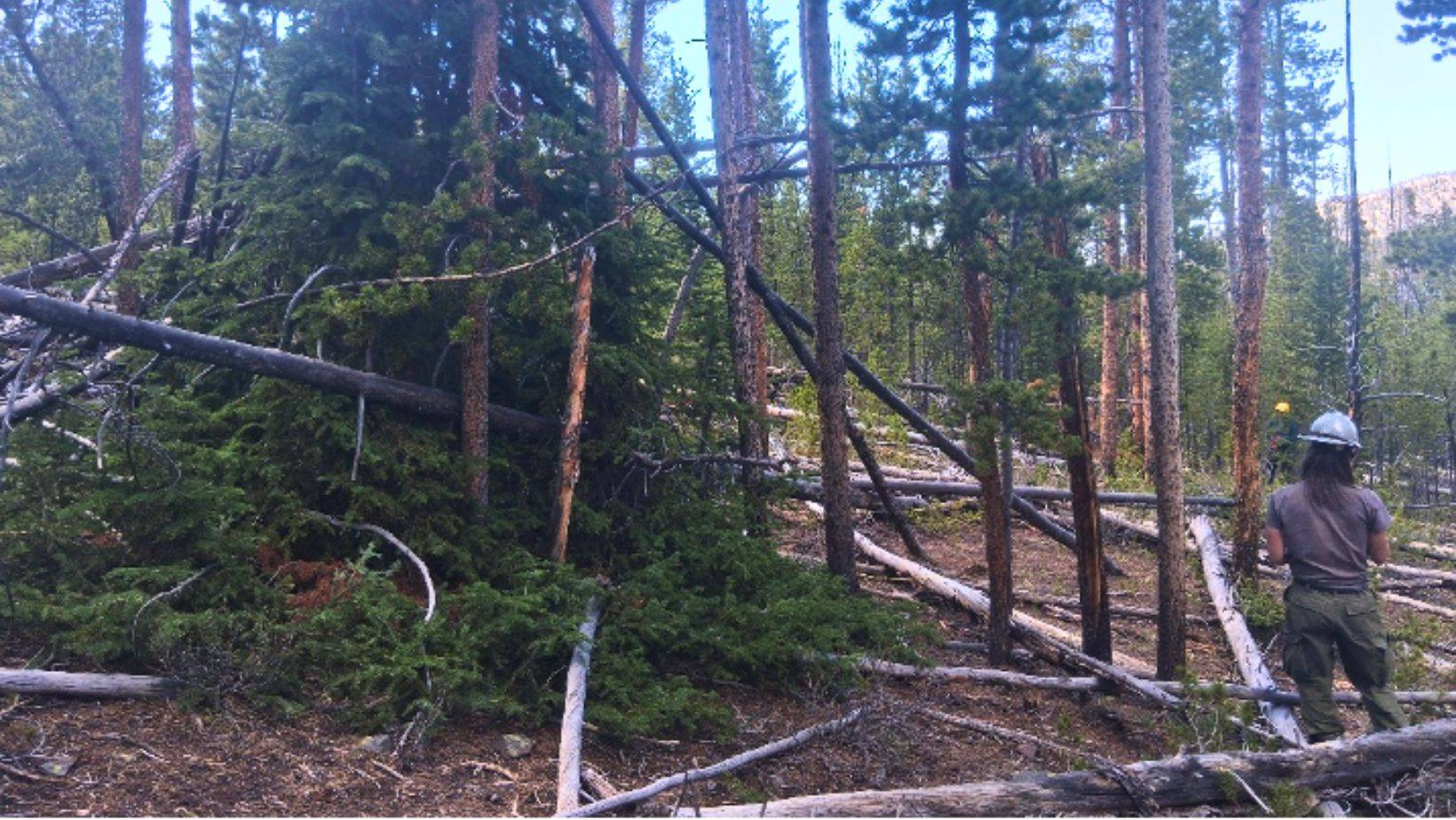
UFRI field crew conducting pre-treatment measurements in Rocky Mountain lodgepole pine forest, Evanston-Mountain View Ranger Districts,
Uinta-Wasatch-Cache National Forest, Summit Co., Utah.
Project Summary
We are collaborating with the U.S. Forest Service to evaluate the effectiveness of treatments in Rocky Mountain lodgepole pine forests on the north slope of the Uinta Mountains to promote forest health and reduce fire risk.
The project aims to reduce hazardous fuel loads caused by pine beetle-caused mortality and increase regeneration of healthy trees. “Slash line” burning is a novel technique currently in use in other forest types in Utah. In this project, crews are cutting 50-foot-wide strips at 100-foot spacing in summer and fall, allowing the cut wood to cure, then burning the resulting slash lines and adjacent trees during winter when snow is on the ground. Managers hope these high-intensity slash line burns will result in fuels reduction and mortality in disease-impacted trees that will stimulate the regeneration of a healthier forest.
We have established 55 pre-treatment monitoring plots. Some of these plots are in areas targeted for treatment, while some are in adjacent no-treatment control areas. These plots will be monitored regularly to determine treatment effectiveness in meeting forest health and fire risk reduction objectives, as well as to assess long-term forest recovery.
Significance and Potential Impact
If slash-line burning is shown to be an effective means to achieve management objectives, this technique has the potential to be scaled up and implemented in other areas of the forest to improve forest health and resilience across a much larger area of the Uinta-Wasatch-Cache National Forest.