
Ongoing Projects
Tracking lists
Utah Rare Plant Program maintains an extensive database of sensitive species across the state, which are sorted into three different lists. These are first based on NatureServe ranks. All species are assessed and given both a G rank (global) and an S rank (subnational/state). For example, an extremely “secure” species at both levels would be ranked G5S5, and a “critically imperiled” species, the highest possible ranking, would be considered G1S1. Note that a plant that is globally secure but imperiled at the state level could be ranked G5S1.
The three lists we maintain:
SGCN - Species of Greatest Conservation Need
This is our highest priority list, and generally it includes all plant species that are ranked G1-G2 and/or S1-S2. The vast majority of our monitoring and surveying work is focused on plants from this list
SGIN - Species of Greatest Information Need
Many plant species across the state have extremely little information available on them, whether that is due to taxonomic confusions or because the range is not well understood. If a taxon is on this list, we have general concerns about it, but lack the information to make any claims about how sensitive it actually is. When possible URPP makes efforts to study these plants so they can be more properly managed.
PSGCN - Potential Species of Greatest Conservation Need
These species are generally well studied and of lower conservation concern than our SGCN list, but more sensitive than most globally secure species. These are typically plants ranked G3-4 and/or S3-4. It is relatively easy to include these species on a list, as it makes it possible to passively gather data on them when surveying for other higher priority species. Maintaining this list means that we will be prepared with current and historical data if they are found to be higher ranked than previously considered.
Field surveys and Monitoring for conservation agreement species:
Astragalus anserinus (Goose Creek milkvetch)
Ranked G2S2 in Utah, with a very small global range in the northwest corner of Box Elder County, including populations in Idaho and Nevada. It is mostly restricted to ashy outcrops in this area. It was placed under a conservation agreement in 2015 to prevent a federal ESA listing, and has been monitored in accordance with this agreement since then.
Astragalus desereticus (Deseret milkvetch)
Ranked G1S2 and endemic to a small area in central Utah. It was listed as threatened under the ESA in 1999, but delisted in 2018 based on information that suggests the threats to the species were not as significant as originally thought.
Three Milkvetch conservation agreement: Astragalus sabulosus (Cisco Milkvetch), A. vehiculus (Stage Station milkvetch), and A. iseleyi (Isely’s milkvetch)
These three closely related species all have extremely small ranges in eastern Utah in the Moab area. In 2022 they were placed under a conservation agreement to avoid federal listing of the species, and URPP has been instrumental in the ongoing monitoring and surveying for the trio.
Uinta Basin Penstemon conservation agreement: Penstemon grahamii (Graham’s beardtongue) and P. albifluvius (White River beardtongue)
Distribution is limited to the Uinta Basin, primarily in Utah but with some populations in Colorado as well. They are primarily restricted to barren shale which often overlay oil beds. Several efforts have been made to federally list these species, however they ultimately did not meet criteria and were placed under a conservation agreement in effect from 2014-2034.
Field surveys for federally listed and SGCN/ SGIN species, including:
Astragalus montii
(Heliotrope milkvetch) is a Utah endemic restricted to limestone exposures at high elevations on the Wasatch Plateau in Central Utah. URPP has conducted several years of monitoring in collaboration with the USFS.
Washington County federally listed species surveys
Details Coming Soon
Cache County endemics
Details Coming Soon
Manti La Sal National Forest endemics
Details Coming Soon
Washington County federally listed species surveys
Details Coming Soon
Cache County endemics
Details Coming Soon
Sharing appropriate data with partners, according to GRAMA regulations
Details Coming Soon
Hosting annual partners meeting
Details Coming Soon
Digitizing plant location data and related paper files
Details Coming Soon
Utah lake vegetation mapping and restoration
Details Coming Soon
WMA baseline assessments and conservation recommendations
Details Coming Soon
Drone use as a tool for monitoring
Details Coming Soon
Native seed collection for restoration and other programs
Details Coming Soon
Rare plant species status reports
Details Coming Soon
Collaboration with researchers investigating taxonomy of rare plants in Utah.
Details Coming Soon
Development of ArcGIS tools for our team and other partners
Details Coming Soon
Links to Ongoing Projects/Collaborations
Exciting finds from recent years
2022
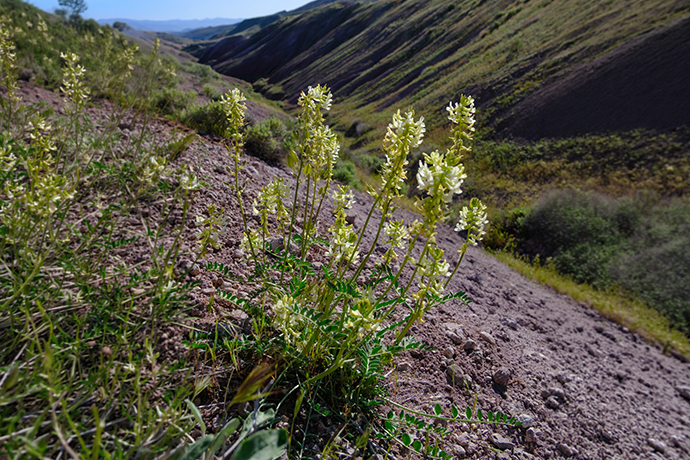
New population of Astragalus ampullarioides (Shivwits milkvetch)
A new population of this federally threatened plant was found near Leeds, Washington County. This was the first population found for this very rare plant in several years. Finds like this can have major implications for the conservation of sensitive species, as they expand the known range which leads to more informed management decisions.
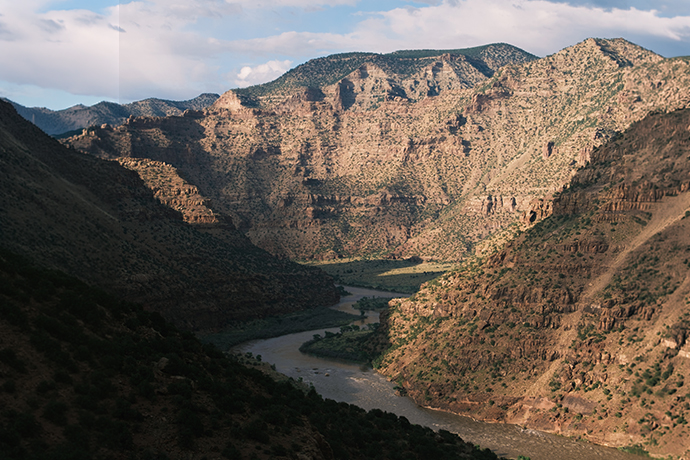
Desolation Canyon River Trip (#1)
URPP’s first trip down Desolation/Gray Canyons in collaboration with the BLM led to the documentation of many populations of rare and sensitive species, including Cycladenia jonesii (federally threatened), Aquilegia atwoodii, Aquilegia desolaticola, etc. This is an extremely remote stretch of the Green River that connects cuts through the book cliffs, connecting the Uinta Basin to the eastern Utah portion of the Colorado Plateau. This area has had very little botanical surveying, making it a high priority for future work.
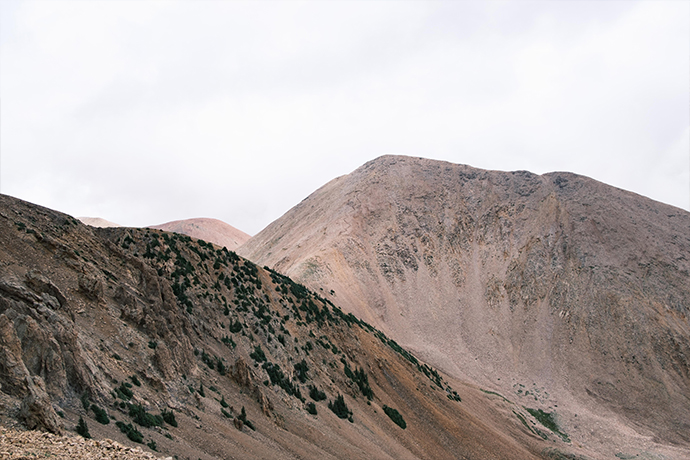
Relocation of Saxifraga cernua (nodding saxifrage)
This inconspicuous species has been documented historically in the La Sal Mountains but had not been relocated in decades. Our team found several populations in the alpine environment, which makes it possible to accurately rank the species.
2023
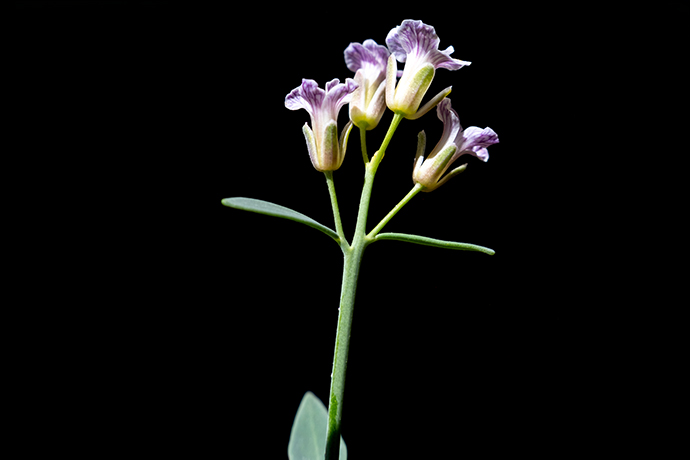
Desolation Canyon River Trip (#1)
Another successful river trip down the canyon. In addition to new finds of the previously mentioned species, we also documented Hesperidanthus argillaceus (clay reed-mustard) in Deso for the first time. This federally threatened species was previously only known from further north in the Uinta Basin.
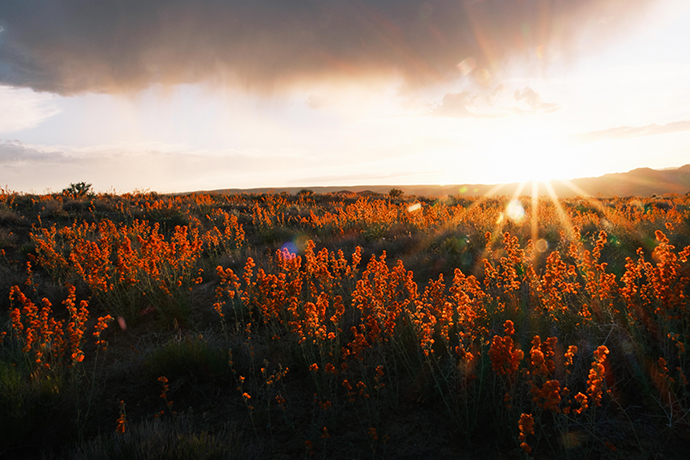
2023 Superblooms
2022-2023 was a historic water year for Utah, resulting in an incredible 2023 field season across the state. Our team capitalized on this by documenting rare, ephemeral annuals like Phacelia sabulonum (beautiful scorpionweed) and Heliomeris soliceps (Paria sunflower). We also had a very productive seed collection season, gathering native seed from many species for the Utah Pollinator Habitat Program and other restoration efforts.
2024
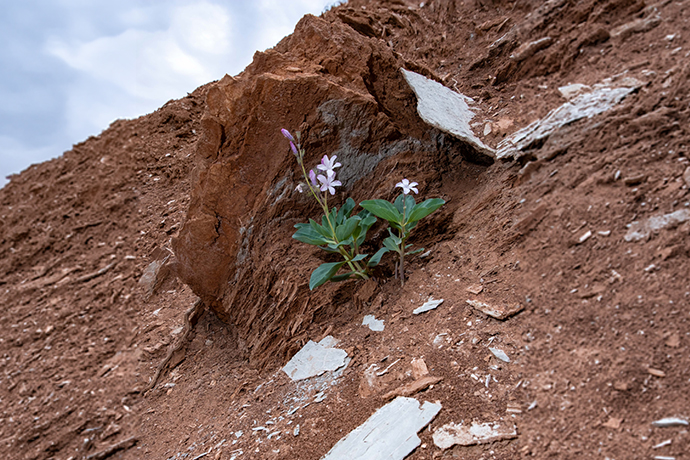
County record of Cycladenia jonesii (Jones’ cycladenia)
URPP discovered in Washington County, representing the first known population of the federally threatened species in the county. After initially locating the plant at Little Creek Mesa, we also found it at Gooseberry Mesa and Hurricane Mesa. The closest population in Utah is well over 100 miles away in the Capitol Reef area. There is also a population of Cycladenia jonesii approximately 30 miles away that appears to be closely allied with the Washington County plants.

Unnamed Lomatium (biscuitroot) from Diamond Fork surveyed.
Researchers at Brigham Young University are working towards the description of a new species of Lomatium from the Diamond Fork area. URPP helped to extend the known range of this plant.
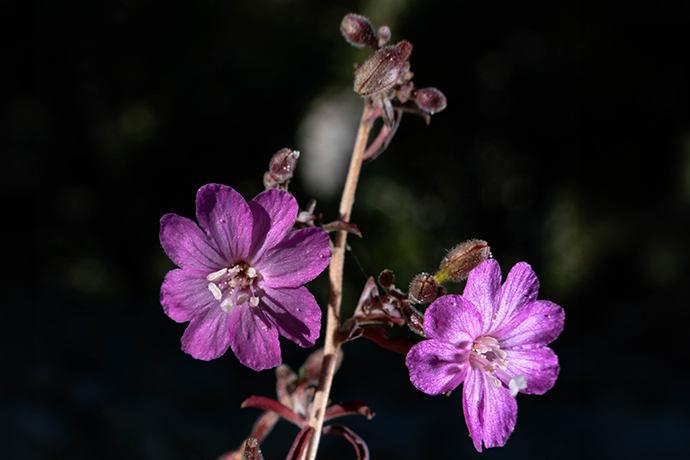
Expanded range of Epilobium nevadense (Nevada willowherb)
Our team relocated previously known populations and discovered new sites for this very unique plant across southwestern Utah. The plant has a very scattered distribution, extending into Nevada, and is poorly understood, likely due in part to its flowering time so late in the season.
2025

Aquilegia (columbine) surveys
URPP surveyed for several rare columbine species, including Aquilegia barnebyi (oil-shale columbine), A. holmgrenii (Noel’s columbine), A. scopulorum var. goodrichii (Goodrich’s columbine) and A. grahamii (Graham’s columbine). Some of these taxa have had very little research, and their distributions are poorly understood.
Platanthera zothecina (alcove bog-orchid) confirmed in Bears Ears National Monument.
This rare orchid was reported from the Dark Canyon Complex by Manti-La Sal National Forest crews in June, before flowers were present that make it possible to make a confident ID. URPP visited the remote site later in the year and confirmed the identification and documented hundreds of plants in the area.

State record of Ericameria winwardii (Winward’s goldenweed).
This is an extremely rare species (ranked G1), previously known only from a total of three populations near the Wyoming-Idaho border. Our team identified the possibility of the plant occurring in Utah based on geologic layers and proximity to known populations. We used aerial imagery to find suitable habitat, and found a robust population just over the Idaho border, in Rich County, UT.

Townsendia raptora (Courthouse Rock ground-daisy) published
Co-authored by URPP botanist Zach Coury.