
Meet the Team
Based at Utah State University, the Utah Rare Plant Program conducts research and develops conservation strategies to ensure appropriate protections for the state's unique species and their habitats.

Mindy Wheeler
Mindy Wheeler received her masters degree from Colorado State University way back in the Ice Ages when moisture was plentiful and the botany gods were thinking of creating grasses. As a result, she chased after grasses (and some other plant forms if need be) in native and reclamation areas over the western US as she and her Neanderthal business partner consulted friendly corporations and agencies on the wonders of the natural world and happily took all advice and suggestions under serious consideration. She entered the Utah government agency world in 2016 as a ‘change of pace’ and has received and continues to receive so much more than she ever thought possible.
What Utah rare plant would you want to reincarnate as?
Likely Big bluestem - can withstand and is highly adapted to grazing, fire and other threats. It is so much fun to capture those small isolated stands of big bluestem west of Nebraska where it used to be so much more abundant in those Ice Ages mentioned above.
Ben Gibbons
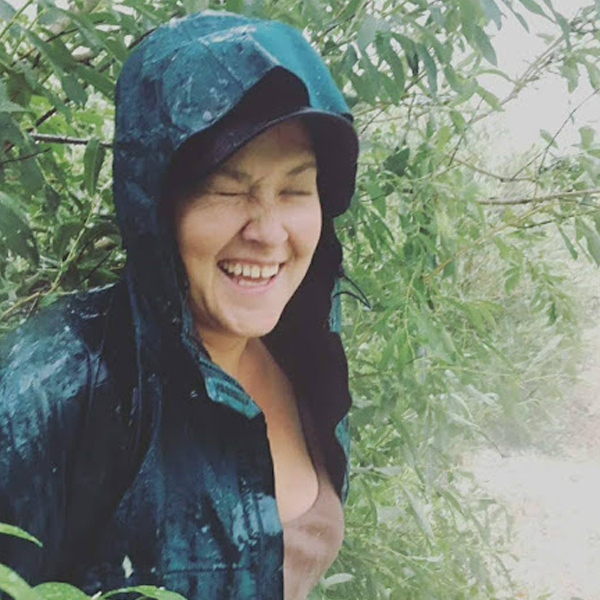
Meghan McCormick
Meghan McCormick received a B.S. in Botany from Weber State University and a M.S. in Plant Pathology from North Carolina State University. Ms. McCormick provides expertise in botanical surveys and monitoring with emphasis on rare and special status species, invasive species control, integrated disease management, GIS cartography, and compliance reporting to various partners. She has worked as a Botanist for the Utah Rare Plant Program since 2017. Previously, she worked for SWCA Environmental Consultants on various natural resource projects throughout the Western US. She also worked for the US Forest Service primarily conducting sensitive species surveys and invasive species control on the Uinta-Wasatch-Cache National Forest.
What Utah rare plant would you want to reincarnate as? I think I would like to come back as a Micropuntia pulchella.
Small, but armed. Succulent. Unassuming until I bloomed. My superpower is the ability to die back to my subterranean parts if the above ground world is too hostile at the moment.

Zach Coury
Zach Coury is a botanist for URPP and was born and raised in Salt Lake City, Utah. He earned a bachelor's degree in mechanical engineering from McGill University, in Montreal, QC in 2021. Before graduating, he developed a deep interest in native plants in Utah, and taught himself enough to be hired on to URPP in 2022. In 2025 he co-authored the description of Townsendia raptora (Courthouse Rock ground-daisy), a new species in the sunflower family from north of Moab. In addition to duties at URPP, he is currently pursuing a masters degree at the University of Utah, investigating the biogeography and phylogeny of Townsendia incana and its close relatives in the genus. Zach also works as a freelance photographer and filmmaker, collaborating with ski brands and environmental organizations such as DPS, Protect Our Winters, and Friends of Great Salt Lake.
What Utah rare plant would you want to reincarnate as?
I think I would enjoy being Eurybia kingii, because composites are cool and I would get to hang out all year in a little crevice on a big rock face in Little Cottonwood Canyon.

Kenzie Anderson-Bell
Kenzie Anderson-Bell is a field botanist with the Utah Rare Plant Program. Growing up in the Mojave Desert of southern California, her interest in botany began while exploring the flora of Joshua Tree National Park. She earned a bachelor’s degree in Biology from San Diego State University, including a year abroad in Melbourne, Australia, and later completed a master’s degree in Interdisciplinary Ecology at the University of Florida focused on invasive plant management. Kenzie has conducted field work across Florida and the Southwest and joined URPP in 2024 after moving to Salt Lake City.
What Utah rare plant would you want to reincarnate as?
If she could come back as any plant she’d come back as Alcove Rock-daisy (Laphamia specicola, formerly Perityle specuicola) because she enjoys the hanging gardens of canyon country and relates to the cliff-dwelling nature of the plant as a rock climber.
Bailey Spears
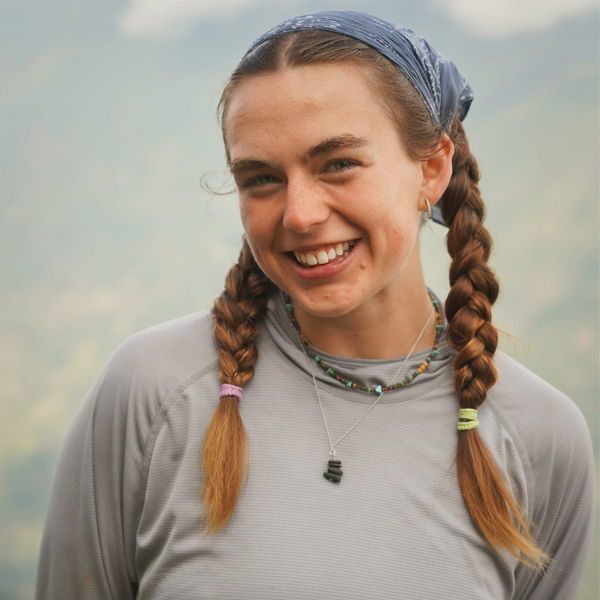
Kailey Gilbert
Growing up in the red rocks of Southern Utah, Kailey has always had a fascination with the natural world. With a Bachelor’s Degree from the University of Utah in Environmental and Sustainability Studies with an emphasis in Land Management and Conservation, a minor in Biology, and a minor in Media Studies, including a study abroad in Monteverde, Costa Rica in the spring of 2025, Kailey is pursuing a career in ecology and botany. She has worked for the Rare Plant Program as a Pollinator Program Assistant since 2024, and is currently employed as a field botanist for the team. Additionally, she works as an Undergraduate Researcher in the Aparecido Ecophysiology Lab at the University of Utah, studying the legacy effects on soil chemistry, biodiversity, and restoration of Russian Olive. Kailey hopes to continue her career studying plants and the roles they play within ecosystems.
What Utah rare plant would you want to reincarnate as?
If I were reincarnated as a plant, I would come back as Petrophytum caespitosum (dwarf spiraea) because I love shady desert cliffs and cool rocks, and it looks like the perfect place for a little fairy home!