
About the Degree
We are proud to be offering a Veterinary Technology Associate of Science degree, beginning Fall 2026. This unique program prepares students for a rewarding career in veterinary clinics or serves as a foundation for further study in veterinary science. The program offers flexible learning, with online lectures and hands-on labs in person through our mobile lab or on campus. It will be available in both Blanding and Logan, Utah.
Degree Finder
USU Catalog
Learning Experience
-
Online lecture delivery for flexibility
-
Hands‑on labs conducted on campus or through our mobile veterinary technology lab
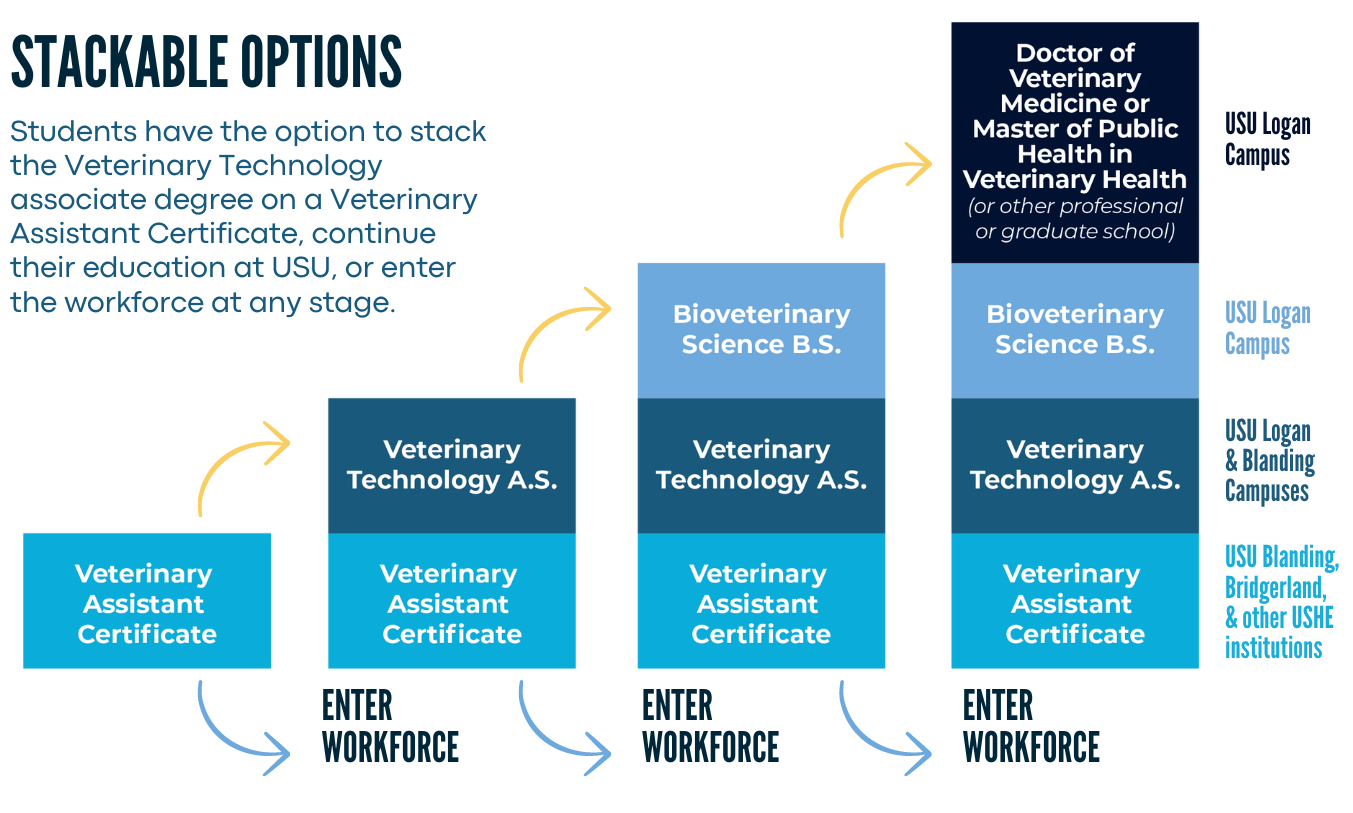
Students have the option to:
-
Stack the A.S. degree on top of a Veterinary Assistant certificate
-
Continue their education at USU
-
Enter the workforce at any stage of their training
What is a Veterinary Technicians Role?
Veterinary technicians are essential members of the animal healthcare team.
Veterinary technicians are:
-
Skilled in assisting with diagnosis and treatment in clinics, hospitals, and research facilities
-
Trained to monitor vital signs, prepare animals for surgery, and take diagnostic images
-
Providers of routine and emergency care using advanced clinical knowledge
-
Typically, higher‑earning than veterinary assistants because of their expanded scope of practice
Launch Timeline
The Veterinary Technology A.S. degree begins in the 2026–2027 academic year. With a phased roll out designed to meet AVMA accreditation standards while providing students with the opportunity to develop the skills and knowledge needed to succeed in this growing field.
Here's what students can expect as the program rolls out:
Year 1 Courses Begin in 2026-2027
In the first year, students will take foundational courses to build essential veterinary skills.
Fall 2026
- ADVS 2000 Introduction to Veterinary Technology
- ADVS 2010 Companion Animal Science and Management
- ADVS 2015 Companion Animal Science and Management Lab
Spring 2027
- ADVS 2020 Companion Animal Nursing
- ADVS 2025 Companion Animal Nursing Lab
- ADVS 2060 Veterinary Clinical Lab Techniques
- ADVS 2065 Veterinary Clinical Lab Techniques Lab
- ADVS 2200 Anatomy and Physiology of Animals
- ADVS 2203 Anatomy and Physiology of Animals: Exploratory Laboratory
Year 2 Courses Begin in 2027-2028
The second year will build on the foundation established in year one, focusing on advanced coursework and hands-on training to complete the Veterinary Technology A.S. curriculum.
Fall 2027
- ADVS 2140 Pharmacology and Toxicology for Veterinary Technicians
- ADVS 2030 Exotic and Laboratory Animal Care
- ADVS 2035 Exotic and Laboratory Animal Care Lab
- ADVS 2040 Veterinary Critical Care Nursing
- ADVS 2045 Veterinary Critical Care Nursing Lab
Spring 2028
- ADVS 2050 Veterinary Nurse Specialties
- ADVS 2055 Veterinary Nurse Specialties Lab
- ADVS 2070 Food Animal and Equine Care
- ADVS 2075 Food Animal and Equine Care Lab
Veterinary Assistant Certificate Pathway
The Veterinary Technology A.S. program aligns with the Utah System of Higher Education (USHE) Veterinary Assistant Certificate.
-
Students completing the certificate may articulate up to 18 credits toward the A.S.
-
At the Blanding campus, students complete the Veterinary Assisting Certificate first, then continue into the A.S.
-
At the Logan campus, the certificate is not required; students may begin year‑one courses directly.
Students currently enrolled in veterinary assistant programs can begin general education or prerequisite coursework at USU in Fall 2026 or Spring 2027 while awaiting year‑two course availability.
Career Opportunities
Graduates of the Veterinary Technology A.S. program are prepared for roles in:
-
Veterinary clinics and hospitals
-
Emergency and specialty practices
-
Research and laboratory facilities
-
Animal shelters and rescue organizations
-
Livestock and equine operations
Accreditation Pathway
USU is actively pursuing accreditation through the American Veterinary Medical Association (AVMA) Committee on Veterinary Technician Education and Activities (CVTEA).
Our phased course roll out is intentionally designed to:
-
Align with AVMA CVTEA curriculum and skills requirements
-
Ensure high‑quality instruction and clinical training
-
Support eligibility for graduates to sit for the Veterinary Technician National Exam (VTNE) upon accreditation approval
Partnerships and Clinical Affiliations
A strong veterinary technology education depends on meaningful, hands‑on experience. To ensure students gain the clinical skills required by the AVMA, the Veterinary Technology A.S. program is building a network of high‑quality partnerships across Utah and the surrounding region.
Admissions and Enrollment
Admission Requirements
-
High school diploma or equivalent
-
Required prerequisite courses
How to Enroll
-
Fill out and submit the online application.
-
Pay the $50 application fee (nonresidents only).
-
You may be required to submit supplemental items such as transcripts.
-
Once you are done, check out our next steps after admission.
Program Cost
Learn more about tuition and fees.