
Loess and Sand Dunes
Loess deposits may be sampled in a similar manner to sandy deposits at vertical exposures using an opaque metal tube. For many parts of US, stratigraphy of loess or sand dunes may not be well-exposed, requiring augering or coring. See below for auger sampling of loess or sand dune sediments.
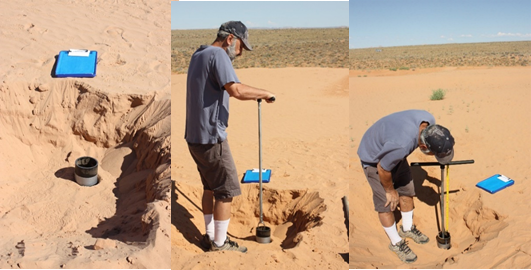
Shallow-sediment Auger Sampling for Luminescence Dating
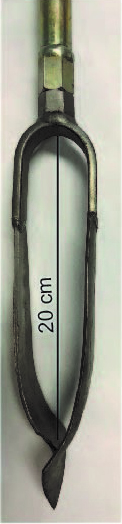
T-shaped handle with extension rod and OSL auger head
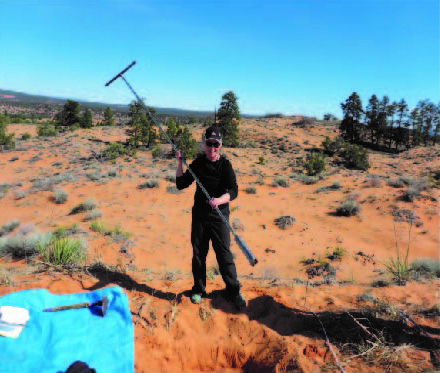
Open bucket auger - Dr sample collection and sediment description
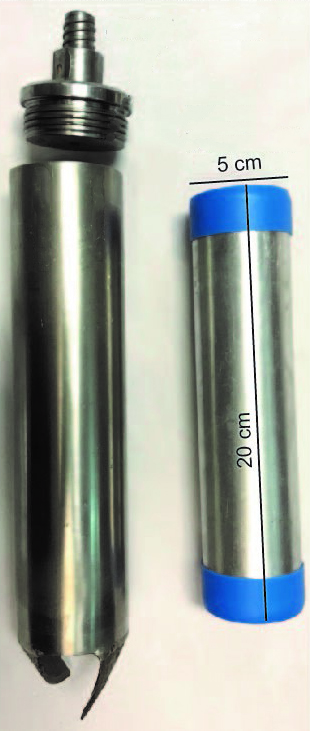
Enclosed auger head for OSL sampling
Key differences between luminescence dating of loess versus sand-size grains is the use of fine-grained polymineral IRSL dating. While this is not a common method used in our lab, in certain cases loess (silt-sized) sediment may be the only grain size available.
It is very important when sampling loess that paleosols are avoided, as these experience the same issues with mixing as modern soils.
- New project form (pdf)
- Sediment samples (pdf)
- Sediment samples (.xlsx)
- Samples from single cores (.xlsx)
- Samples from multiple cores (.xlsx)
- Pottery samples (pdf)
- Pottery samples (.xlsx)
Send samples to:
USU Luminescence Lab
1770 North Research Parkway, Suite 123
North Logan, UT 84341
All samples should be labeled 'Light-sensitive mineral samples for geologic analysis. All material will be consumed in analysis. No monetary value'.
International samples: Send via international shipping company such as UPS, FedEx, DHL, TNT, do not use local postal service.
Email tracking number to Tammy.